10 tips to continue training when injured
by Peter Zarb
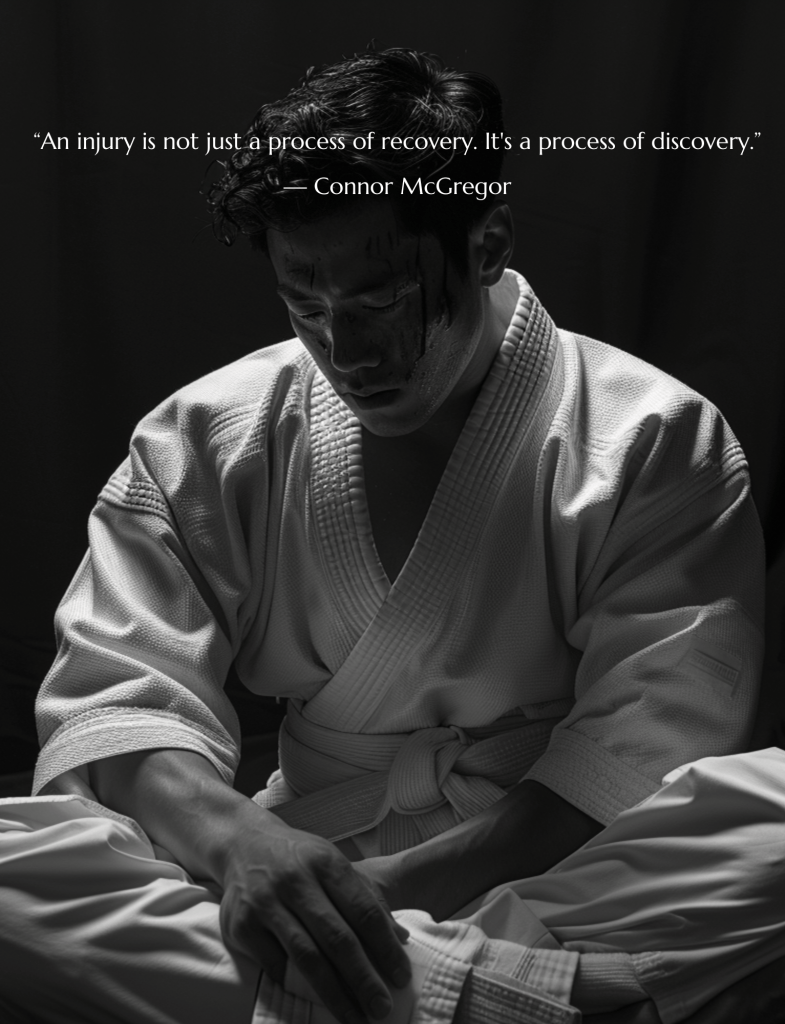
Injuries happen, and often at the most inconvenient times. It’s Murphy’s Law.
Ages ago, I can’t remember the year, I had an industrial accident resulting in a tuft fracture and half of my thumb less attached than is normal. The plastic surgeon did an excellent job knitting it all back together – I mean it was impressive.
I was genuinely surprised by how much I was encouraged to return to work as soon as able, and my regular duties were modified to suit my [dis]ability. It turns out, each state has a ‘return to work’ policy aimed at supporting injured workers to get back into a normal routine. Why? Studies show it aids physical and mental recovery, and helps maintain skill levels.
When injured, people are far more likely to be sedentary when at home compared to going to your work, school or enjoying extra-curricular activities. Plus. The isolation and impotence of being stuck at home all day with an injury can cause poor mental health, especially if you have been an active individual.
You also start losing skills as soon as you stop practising them. While it may never go away completely, the longer the period between practicing or doing, the harder it is to pick up where you left off.
Then there is the social support you get from returning to normal activities. People often think of family and friends as their support network, but colleagues, teammates, and training buddies can play equally important roles.
I saw the value of this first-hand (pun intended) so I integrated the same principles and strategies into my own training and teaching. The week following my injury, I was back in the dojo demonstrating single-handed self-defence tactics.
“We cannot choose our external circumstances, but we can always choose how we respond to them.”
— Epictetus
We cannot avoid injuries our whole lives – I mean, on a long enough timeline, right? Interestingly, this article wasn’t originally written with the above story in mind. In the last 3-year period, I personally know 15+ young people and 1 adult who have suffered fall and impact-based injuries that include broken arms, vertebrae, legs, wrists, toes and a hip! Two were karateka and, no, it didn’t happen in the dojo. This article was inspired to help these community members bounce back from their injuries and stay well physically and mentally.
Here are my 10 tips to getting back to training while injured and in recovery.
1. Listen to Your Medical Professionals (not DR Google)
Specialists train very hard. It would be counter-productive to ignore a professional’s advice. Surgeons, doctors, nurses, physiotherapists: hear them out. They want what is best for you. Don’t get me wrong. I’m all about getting second and third opinions and making sure the advice I’m given is consistent and right for me. Some professionals are specialised in certain fields, for example, the hand therapist who helped with the rehabilitation of my thumb. A general practitioner, while a capable medical professional, may not have the specialised knowledge that my hand therapist or orthopedic surgeon has. That’s where referrals come in. Get the right advice. Then stick to it.
2. Read
Whatever your passion is – karate, rugby, competitive rock, paper, scissors – find books, blogs and articles, and do some research. What are its origins, history, influences and key influencers? How has it developed over time? Etc. Exercise your mind – it is one of your most important organs after all. Remember, knowledge is power.
“To truly master karate-do one must embody the entire philosophy; without a strong and virtuous mind, the body is useless.”
— Ohtsuka Tadahiko Sensei, Goju Kensha Saishinkan Japan
3. Watch: Classes/Sessions.
You’ll be surprised by what you can pick up from simply watching others train. How people move, their posture, and technique. You are looking for what is being done correctly or differently and comparing it to how you do it. I’m not talking about being judgmental: simply observing. Listen intently to the coach give students advice or correction. This guidance could also apply to you. A word to the wise – don’t give unsolicited advice (says the guy writing the article). Some people don’t know they need help, or they don’t want it. You do you.
4. Watch: YouTube/Instagram/Vimeo etc.
You will need to filter. Flashy introductions are not necessarily an accurate representation of quality. There is danger in inexperienced people picking up bad habits from poor-quality resources. There are some amazing diamonds amid the hundreds of thousands of videos online. Sadly, there is also quite a lot of questionable content and coaches. If you are an experienced athlete in your selected art/activity, then this filtering process will be swift. If not, ask your coach for directions to the appropriate supplementary material for you.
“Katatsumuri, soro soro nobore, fuji no yama”
“O snail, Climb Mt. Fuji, But slowly, slowly!”
— Kobayashi Issa (小林一茶)
5. Go Slow
Excitedly rushing into training can cause more injury. I remember arriving at the dojo after having a suspected melanoma removed; three stitches. It was all going well until I got a little too eager, BAM went the punch and POP went two stitches. It is ok to go slow. In fact, I’d argue that going slow is essential for developing the appropriate technique. You create the correct neural pathways and muscular control by deliberately practicing slowly. If you can do it slow perfectly, you can do it fast perfectly. Don’t think that you can hide poor technique in speed from an experienced instructor *wink*. The military uses the saying “slow is smooth and smooth is fast”.
6. Work with What you Have…
Hurt a leg, you’ve still got two arms and a leg. Hurt an arm and you’ve two legs and an arm. Basically, work with what you have that still functions, providing that it does not cause referred discomfort. Listen to your body. Never push through trauma-based pain. If it is hurting, do not do it. Experience and intelligence mixed with determination are the perfect formula for innovation. If you have a skilled and qualified trainer, they will be able to innovate and demonstrate exercises and strategies that enable you to train risk-free. This is the hallmark of a true master of their craft.
7. Immobilise the Injury
You can’t be trusted: trust me. Those reflexes you’ve spent hours honing – they’re dangerous. If you immobilise the injury, you reduce the risk of an automated, unconscious response that could exacerbate your injury. Wrap it, strap it, and be cautious. It is your body and your responsibility to ensure you have it in great working order for life. You create the correct neural pathways and muscular control by deliberately practicing slowly. If you can do it slowly perfectly, you can do it fast perfectly. Don’t think that you can hide poor technique in speed from an experienced instructor *wink*. The military uses the saying “slow is smooth and smooth is fast”.
8. Basics
These are the fundamentals of your training. They are essential and, in most cases, can be practiced independently. These skills are important to keep up so long as they do not cause you pain. Dribbling a ball, kicking a footy, punching and kicking; do what you can to keep active, slowly and carefully.
9. Pair and Group Activities
Avoid spontaneity. Only through carefully planned activities can you hope to train alongside others without injury. Your goal should be risk-free training in a safe, supportive environment. Do not compete, period. We are hard-wired for survival. The sympathetic nervous system responses can create the right biochemical results to do well in the moment, but after will leave you in a much worse position than when you started. Keep things simple and structured. One on one is ok but adding more people to the mix creates unnecessary complexity.
10. It is Okay to not be Okay
Having an injury can be hard work, physically and emotionally. Reach out to your coach and teammates. This could be as simple as starting a small conversation about training methods or as huge as confiding in how you are feeling. There are great bonds of friendship that develop within genuine health and well-being communities – fighting arts, especially. There is a level of trust that can transcend everyday friendships; I am putting my physical well-being in your hands, or rather fists, after all. These people will want to help, even if it is to lend you an ear to hear or a shoulder to cry on. Showing emotion is never a weakness; in fact, it is our greatest strength – acknowledging our vulnerability rather than pretending to be invincible.
With the right mindset, an injury has the potential to reveal some great things about you. As Seneca the Younger said, “A gem cannot be polished without friction, nor a person perfected without trials.”
About Peter Zarb
6th dan Goju [Kensha] Ryu Karate black belt. Peter Zarb, is described by fellow karate experts as:
“A thinking gentleman warrior – highly trained, unassuming, accommodating and friendly. It is rare to find people of the younger generation who are as knowledgeable about true martial arts as Pete.”
Peter’s training under renowned masters in Australia, Japan and Taiwan has helped mould him into the natural and skilled instructor he is today. He has been studying karate since he was a young boy and teaching for over 20 years. Peter has spent decades researching and supplementing his training experience with complimentary and influential combat arts, including other karate style, judo, and internal kung fu.
He is a generous, outgoing and knowledgeable instructor whose humorous, easy going attitude spreads throughout the dojo. But do not be fooled, you will train very hard with him.

 Martial Arts Magazine Australia
Leave a comment